Monday, May 14, 2007

Don't Be Ashamed of Your School: Pick Your Head Up and Have a Little Pride

By Melissa Pinto
News Editor

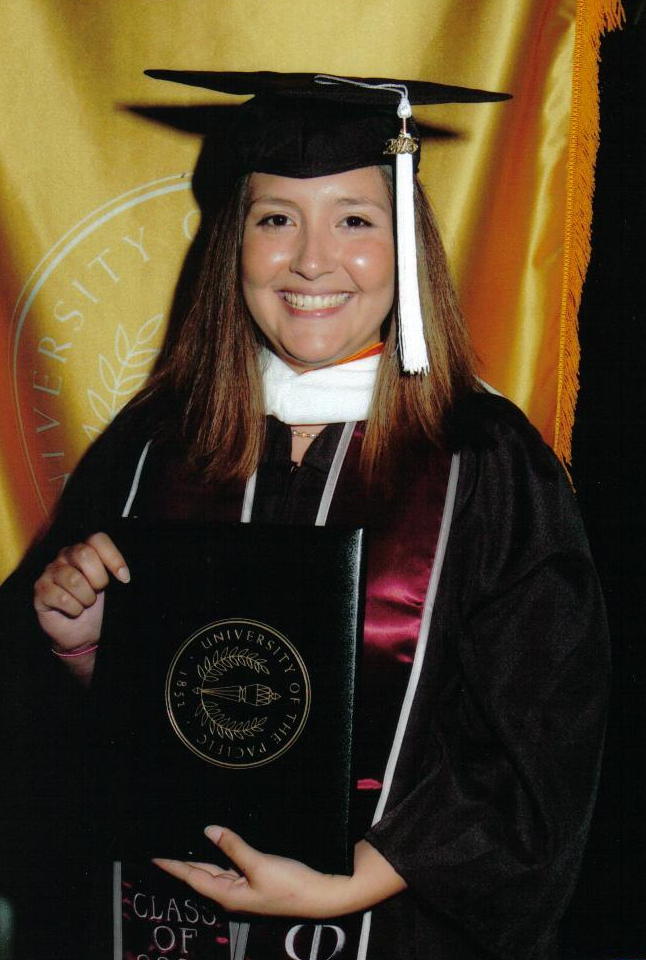
The author, Melissa Pinto, outside HCC.

Due to a jam-packed Spring 2007 Issue 3 (a record-breaking 32 pages long!), the picture above didn't make it into the print edition, but it was too good to waste...

The full text of Melissa's editorial is repeated below.


I've done it. I know a lot of you have done it. When someone has asked you, “Where do you go to school?" you made a face, shrugged your shoulders, and replied, "Housatonic."

Enough is enough. Pick your head up, and say it with a little pride. "I go to Housatonic, and it's not bad like you think it is."

About two weeks ago I overheard a conversation. Sadly, it was a family member of mine. As I listened in on a conversation between an over- zealous family member and my younger brother, my temperature began to rise. I heard him say, "And don't think you are going to that Housatonic school. You are going to go to a real college."

Never before had I had much feeling on what people thought of where I currently studied…until then.

HCC gets a bad name solely based on ignorance. People assume because we are in downtown Bridgeport that there must be thugs, drugs, and violence roaming the campus. Odds are, if you're silly enough to believe that, you probably haven’t been downtown recently. Growing up in the area, I’m proud to say that the area gets a little better every year. In my opinion HCC's campus has only added value and a better reputation to the respected area. Never has there been a single day in the two years that I've attended HCC that I've been afraid to walk down the street to the deli on my break, or to walk to my car after dark, contrary to popular belief.

Ignorant people also assume because we here at HCC are just a community college, that it's not a "real degree". Like hell it's not. I work just as hard as Joe Shmoe who goes to Quinnipiac. I still pull all-nighters, and write long, outlandish 15-page papers. The difference is, I'm not paying $30,000 a year to do it. I'll pay my small tuition for two years and save my money before I'm forced out the doors and into a high priced university.

By the way, Joe Shmoe is just a number. At UConn or Southern, Mr. Shmoe is known solely based upon his social security number and gets lost in a sea of a hundred faces in his freshman English class. My English teacher knows my name here at HCC. He knows I'm there without a sign-in sheet or having to read roll call, and, to me, that counts for something. Not only am I graded on my written tests, here at HCC teachers have the ability to factor in your eagerness to learn.

On top of all of this, here at HCC I found my inspiration: a teacher. As corny as it may sound, when I came here, I was uncertain of my future and or career, lacking motivation and just going through the motions. One fall day, upon walking into a new classroom, I came across a teacher who would soon change my life and, more importantly, my way of thinking. Because of the student-teacher relationships that HCC prides itself on, I was given the gift of a teacher who cared. Most friends I know who attend large universities were never lucky enough to have their inspiration placed right in front of them.

Recently I have been accepted in a well-known, reputable school in New York City. Not only did I get accepted, I was awarded a large sum of money to attend. The humdinger is, two years ago, this university would have not only slammed their door in my face, but would have had quite the chuckle too!

HCC gave me an outlet to work hard, bring up my grades, and finally make a name for myself. I feel that, in some cases, high school students don't comprehend the severity of "grades" until it's too late. In my opinion, school is an area of life that you aren't able to prosper in until you are ready. HCC gave me a place to finally "be ready" and to erase the times when I was not.

Although starting in the fall I too will become a Joe Shmoe, and probably just a number in a crowd, for two wonderful years, HCC gave me a place to just be me, and that is something worth being proud about.

Wednesday, May 2, 2007

Kurt Vonnegut, Jr. – A Prolific Author Remembered


ONLINE EXCLUSIVE!


By Brandon T. Bisceglia
Staff Writer

I first chanced upon the works of Kurt Vonnegut, Jr. in the fifth grade, when my class read the short story, “Harrison Bergeron.” It was the story of a society that had decided to literally cater to the lowest common denominator in every possible way. Strong people were laden with weights. Intelligent people had buzzers in their ears to periodically interrupt the reasoning process. But one man overcame these shackles, finding that working against them made him more powerful than he could otherwise be. In a world of restraints, he refused to acquiesce.

This tale of freedom was not only uplifting -- it was told with an intriguingly imaginative flair. Soon after reading the story, I began wading through Vonnegut’s other quirky novels: Cat’s Cradle, Galapagos, Timequake, and so on. Each book had a serious poignancy that shone through his amusingly anecdotal style. It kept me looking for more from the talented, if cracked, writer.

The most personal and controversial of his fiction works was Slaughterhouse-Five, which was in part a fictionalized account of Vonnegut’s experiences in Germany during World War II. There, an extremely fortunate event occurred – he was captured by the Germans and became a prisoner of war. This was fortunate because his duties incidentally saved him from annihilation when the Americans firebombed Dresden, a cultural hub with no conceivable military significance beyond being in Germany.

For years, Slaughterhouse-Five was banned from schools and libraries for its gruesome imagery and anti-American sentiments. It inadvertently raised him to the status of counter-culture icon. The catch phrase (oft repeated in the novel), “So it goes,” became timelessly popular in literary circles. Today, the book is required reading in many classrooms.

On April 11, 2007, Kurt Vonnegut, Jr. died. He had suffered brain injuries from a fall in his Manhattan home a few weeks prior. He was 84.

The spirit of this irascible man would be impossible to reproduce. In his own time, there were few authors with the same inventive, curiously dark humor. He scribbled pictures of wide-open beavers – both kinds – in his novels. He dubbed Manhattan, “Skyscraper National Park,” because it seemed to him as if New York City had sprouted from the ground. He smoked, calling his habit a, “fairly certain, somewhat dignified, form of slow suicide.”

Though he primarily wrote fiction during the 1960s and 70s, his focus during the last 20 years of his life shifted heavily to non-fiction. In 2000, he taught advanced writing at Smith College, and in November of the same year, was given the title “State Author of New York.” He had, by then, over 20 books in print. He had taught at Harvard, been awarded an MA by the University of Chicago (for Cat’s Cradle’s contribution to cultural anthropology), and acted as President of the National Institute of Arts and Letters. He had adopted his sister’s children when she and her husband had died suddenly. He had been married several times, and had once attempted suicide with alcohol and sleeping pills. There was little the man had not experienced.

Kurt Vonnegut, Jr. was not unfamiliar with death. He had written about it in many ways. On one notable occasion, he wrote a secular requiem. He told a reporter from New York Magazine that he wanted to present something that didn’t require the fear-provoking notions of heaven and hell. Instead, he built it around the idea that, “There’s nothing to fear in the afterlife, so I just had everybody sleep, ‘cause I like sleep.”

What made him a true satirist and an inspiring human was the underpinning optimism he retained within his dark attitude. He claimed that he wanted his epitaph to read: “The only proof he needed of the existence of god was music.”

It is a shame he did not live to see it.

So it goes.

The Inside Story of the Student Senate

The hard working Student Senate Secretary (me) at work.
(Photo by Rebecca Starke)


ONLINE EXCLUSIVE!

By Shanar Fraser
Staff Writer

The Student Senate is a wonderful club to join that teaches all about politics and the procedures that go on in our government. It is made up of a group of students, and what they do is govern the clubs, plan events, and serve as the voice of the students.

To become a senator, all you have to do is have fifty of your fellow students fill their name on a sheet of paper. After that, you turn it into Shante Hanks’ office. Then you go to an executive board meeting, and they put your petition on the agenda for the following Wednesday’s meeting. You go to the Senate meeting, and they give an interview of sorts, then they vote you in or not in. That is the process of becoming a Senator.

After you have served a least a year as a regular Senator, you can be nominated for the executive board. The seats on the executive board are President, Vice President, Treasurer, and Secretary. The other positions that the Senate have is College Senate Representative and Foundation Representative.

I first got to know the Senate as a club rep for the Black Student Union. After about a year, I wanted to join the Senate. Shortly after I joined, their secretary resigned, and they needed a new one.

I nominated myself for that position, but it was on an interim basis until they got a new secretary. That was back in 2005.

Then the spring elections came around, and nobody was running for Secretary, so I nominated myself to be the official secretary. It was in 2006, and I won that election.

Then in 2007 I did not run for anything, but the Secretary once again resigned, and in mid-semester I asked the president if I could fill that vacancy, and he said yes. So once again I became the interim secretary.

Some of the committees that I was on include the Activities Committee and the Finance Committee. I helped to plan the Student Senate Luncheon and Appreciation Day. I also went up to the capital to meet other Senators from other schools.

Some things the Senate could work on are planning some more events for the night students, and discussing stuff in a timely manner.

What the Senate does well is helping out other clubs when they need help, and being there for the students, like when a student needs help with something they come to the Senate.

The Senate is really a great club to be a part of. It gives you some leadership abilities and gets you to the higher levels in the school. Plus it allows you to help your follow students.

So if you do not have anything to do, or if you have some free time on your hands, then the Senate needs you. Stop by the Senate office, which is in C110, to pick up an application.

Friday, March 16, 2007

March 2007 Web-Exclusive Content: HCC Behind the Scenes

What follows are articles written by advanced writers for Horizons, who were asked to explore a subject that would bring us behind the scenes at Housatonic. As you can see, the staff interpreted this theme in a wide range of ways, giving us insight into everything from how professors prepare classes to learning at an off-campus site to coping with anxiety in the classroom.

Happy Reading!

Steve Mark
Advisor to Horizons

A Labor of Love

By Jessica Rougeau
Staff Writer

We've all had that feeling of relief after finishing a big test that we spent hours studying for, or a feeling of accomplishment after we've participated actively in a heated class discussion. However, we expect to be taught something new in class each day, as well as have a chance to demonstrate what we've learned. It's the time our professors spend outside of class that makes this possible.

Grading is a large part of a professor’s job, but it's also important that their students excel with their help.

“When I plan the curriculum for my classes, it is always with the student in mind. I want to make sure that I offer a variety of grading options to meet the needs of many. So, aside from testing, I always offer a paper, presentation or project of some sort," said Psychology professor Claudine Coba-Loh.

Nothing beats first-hand experience to bring back to the classroom; it resonates more effectively than reading aloud from a textbook. History professor David Koch said,
"I use traveling experience, because so much of history is geographical, and I see a lot of historical monuments and things when I travel. I also use information I pick up from any outside source- newspapers, politics, or current events."

Staying on top of new styles in teaching and relevant materials is another responsibility professors uphold to keep class interesting.

"I'm always reading. I read the latest trends in teaching. I read the latest textbooks for all the courses I teach and continually weigh one against another to determine which one will best serve my students. I'm always looking for literary works that will engage my students," says Adjunct English Professor Joann Rochman.
In order to get her students to read closely she has come up with the idea of the "envelope exercise." First, she searches for a well-written essay, then she cuts it up paragraph by paragraph. After mixing up the individual paragraphs, she puts her class into groups and they each work together to rearrange them in correct essay form.

"It forces them to read closely, to look for the transitions, for the topic and thesis sentences. It makes them aware of how a good essay is written,” Rochman says.

Rochman has done years of research on how grammar can affect students in the real world as well as aid students in gaining the confidence to share their ideas and develop leadership skills.

"I think it really helps for the professor to have hands-on experience in what you are teaching. I often talk about clients and their life situations that I have worked with to help students to understand difficult concepts," says Coba-Loh.

Professor Koch can still remember some of the presentations he did from 1989 when he worked at Gettysburg National Military Park in Pennsylvania

"There, I learned from perhaps the greatest Civil War historians in the country about the war, the battle, and the National Cemetery, where Lincoln delivered the Gettysburg address. I use this information throughout the US History I and II courses. The experience of working there was so moving that I have never forgotten it,” Koch says. Professor Koch's work experience also included organizations like the World Bank and National Park Service, which have impact on the world today.

A professor’s job is never done when there are always new things to learn as times continue to change.

“I spend far more hours working outside the classroom than I do in it. I research for methods and if I don't find what I need to best help my students, then I create an exercise myself. I don't think that good teachers consider correcting papers outside of class the bulk of their work as teachers. I like to keep the words ’reach students’ as close to my goals as ’teach students’. For me it's a labor of love and not something I classify as additional work,” Rochman says.

It is this kind of dedication that allows for limitless success and will only prepare you better for the future. Attending classes is one thing, but the hard work and creativity of professors as well as the encouraged free expression of the students makes everything worthwhile.

Ghost in the Machine

By Cody Quinn
Editor-in-Chief

HCC’s Computer Monitoring Tools Help or Hinder Students.

I was sitting in front of the screen in the computer labs at HCC idly reading an article on espn.com, when my mouse’s arrow flashed. Startled, I checked the position of my arm to see if I had accidentally brushed the mouse. I hadn’t.

I went back to my reading when the arrow flashed again. It then proceeded up to the “x” on my window and closed it out.

My first thought was, “Holy crap! My computer is haunted!” However, upon further investigation, I learned that the computer labs are not a haven for poltergeists, but actually monitored by HCC Information Technology (IT) staff.

“I was clicked out of the Internet because I was using Google to find pictures for a Powerpoint presentation,” one student said.

The Phantom Cursor, as some students have come to call it, is a tool the IT department uses to cut down on unauthorized computer usage. When a student is performing an activity deemed inappropriate by the IT staff, they close the program out remotely.

The staff declined to comment on the specifics of how they monitor the computers due to fear of students finding ways around their tactics.

Any student familiar with the computers at HCC has seen the list of rules for usage every time they boot up. The rules include prohibiting food and drink in the computer lab, using chat rooms or IM functions, using myspace or facebook, and using online stores, such as eBay, among other things.

According to the HCC Student Handbook, “Any unauthorized or illegitimate uses of IT resources may subject the user to disciplinary action, up to and including dismissal or expulsion, as well as loss of computing privilege.”

“All computers are monitored except those not needed to be monitored,” said Chris Currivan, an IT tech here at Housatonic.

In order to understand the limits of our IT department’s efforts, I tested some of the rules.

Aside from the aforementioned incident with espn.com, I was able to go through the process of buying an item on eBay in one computer lab, signed up for an account on eHarmony (a forty-minute process) in another and able to check out pictures on maximonline.com without trouble for approximately ten minutes.

I wasn’t able to log onto myspace.com, but I was able to go on to facebook.com, a similar site.

“There was a method by which we were able to [block myspace],” said Currivan.

He also said that although no measures were in place to stop people from using similar sites, they were working on ways to block students from accessing those sites.

“We are not aware of all the social sites,” said Jesse McAllister, another IT technician at HCC, when describing the difficulty in monitoring what are and aren’t appropriate uses of school computers.

“The worst part is I get in trouble for doing legitimate school work; I’ve seen people on recreational sites countless times without penalty,” one student complained.

Some infractions are easier to spot.

“Porno is porno,” McAllister said.

He added that Instant Messaging, AOL, and shopping are much easier to spot, and, therefore, deal with.

Yet one student was not so sure. “I was sent an angry message to stay off of instant messenger, when I was clearly using the thesaurus is Microsoft Word,” she said.

Welcome to 13th Grade

By Jeanne O’Leary
Managing Editor

Off Campus Classes Provide a Unique Experience

The parking lot outside of Jonathan Law High School was slowly becoming occupied with people who all had the same purpose, attending a college class. There are two different locations for HCC students to attend classes outside of the college campus, Ansonia High School and Jonathan Law, according to the HCC course guide.

For some students, attending the same classes offered at HCC at a high school provides a very different atmosphere.

“The biggest difference in teaching at Jonathan Law is having highly motivated adult learners,” said HCC adjunct English professor Elizabeth Keefe. “They have a goal in mind.”

Keefe explained that a lot of the students taking classes on campus during the day mostly consist of kids fresh out of high school who don’t really know what they want to do with themselves, whereas the night students are usually looking towards getting a better job.

Jeff Litwak, a nursing major at HCC, also noticed the perks of being a part of the off campus classes. He is currently taking a public speaking class at the Jonathan Law location.

“I like the one night a week classes off campus,” said Litwak. “It’s a nice mix and a much easier situation. [There is] no hassle of a parking structure, either.”

He also noted that these classes definitely consisted of an older crowd and a smaller number of people. He said he gets the feeling that people want to be there.

Interrupting Litwak was HCC professor Amy Carattini as she entered the class out of breath.

“Sorry, I was rushing from my other class at HCC,” said Carattini. “Sorry to keep you waiting.”

She continued to address the class about their speeches that were due that night and passed out student evaluations for everyone to fill out.

The first girl to stand in front of the class was a little fidgety, but spoke with confidence about obstacles that she had overcome throughout her life. When she finished her speech the class responded with applause and positive feedback.

“She was really good,” said one girl. “I don’t even want to go now.”

The speeches continued and the class gave everyone the same amount of support and praise for sharing their story. After about five speeches the class was allowed a short break to give themselves a breather.

Carattini agreed with Litwak and Keefe when discussing the atmosphere of off campus classes. She described them as an untraditional, older crowd and a driven group of people. However, she also noted that there was a downside to the off campus classes as well.

“Resources are the biggest disadvantage to off campus classes,” said Carattini, “like computers are not available to the students.”

Students sitting around Carattini nodded their heads in agreement.

However, students don’t seem to mind the minor inconveniences.

“It’s an easier commute for me,” said Litwak, “and I feel like we are closer here as a class than other classes on campus.”

Follow the Yellow Brick Road

To Housatonic, That Is
By Ashley Chapman
Editor-At-Large

You know that feeling that you get in your throat when you’re about to throw up? It is an all-too-familiar feeling to students who have recently graduated high school and get asked that hideous question, “So what college are you going to?”

Students feel ashamed -- not proud -- to tell the world that they are going to be attending a community college in the near future instead of a university. (You’re saving money, and you’re not just a number.) Or it’s the reciprocal. A student may go to a university first and find that it doesn’t fit, and then attend a community college.

That is exactly what Kevin Bailey did, and he isn’t even embarrassed by it. In fact, he can’t get over the extra amount of cash that he has in his pocket, and how much HCC actually has to offer.

Bailey and his girlfriend, Lindsay Slater, have been city-bound basically their whole lives. So it wasn’t a shock to anyone when they both announced that in the fall of 2005 they would be attending their dream schools. Bailey would be attending New York University and Slater, Marymount College.

When Bailey was a child, he used to go visit his aunt in the city. There they would take walks to New York University’s campus, where he would listen to her stories and memories of her time as a student at NYU.

“[My aunt and I] would often go to the NYU campus around West 4th street and Washington Square Park because the park was pretty, it’s a good location, and had a playground. From there I fell in love with that area of Manhattan,” Bailey says.

From there on his dream was to attend NYU, and to live in the city for the rest of his life. He worked extremely hard in high school, and kept his hopes high when he sent out his application.

“I was hesitant about getting in. NYU is one of the most competitive universities to get into. It is one of the top twenty universities in the nation, and Princeton Review had ranked it the number one dream school. I did graduate in the top ten percent of my class, had a 3.8 GPA, I was on student council, yearbook staff, and national Honor Society, but I was still incredibly nervous.”

Bailey’s girlfriend remembers the time period of waiting for the letter of acceptance, and how intensely nervous he was.

“Kevin had a lot rested on NYU. It was his dream school, and he was so nervous about getting in that he didn’t talk about it much. He didn’t want to jinx it,” Slater said.
He later got accepted, but now he had to talk to his parents about money. To attend the university, it would cost a whopping $47,000 a year. He received a scholarship but it wasn’t for much.

“NYU only offered me seven thousand dollars a year in a scholarship, but my parents knew it was my dream school and accepted my decision to go to NYU,” he said.
It was a big difference for Bailey. He was used to living in Connecticut, and after moving to New York City he realized the things that he took for granted living here.

“I never drove anywhere. I had to learn where anything and everything was, which seems like it would be easier than it is. Walking shoes were a necessity because that is how I got everywhere. I needed to memorize the subway map and know where to get off where, costs, and rush hour times, and I had to learn the difference between express and local,” Bailey said.

Not only did he have to get used to the city as a whole, he had to get used to college as well. He was living on his own, and he didn’t have his parents close by to help him out with anything. Right when he found his nook and began to feel a little more at home, NYU had their own little crisis. That was the beginning of Bailey’s dream ending.

“During my first semester, all graduate students went on a strike for union contracts, and were not teaching labs or discussion classes. So, I still had to attend my twice a week lecture, which numbered up to four hundred students, but I wasn't able to go to a teacher assistant for questions or clarification. Professors rarely replied to e-mails, and my grades that semester suffered for it,” Bailey exclaimed.

Bailey had his girlfriend close by though. It was only a fifteen minute ride on the subway. His girlfriend helped him as much as she could. She was a little piece of home for Bailey, which he needed.

Spring semester rolled around and Bailey was hoping for a change. He scored a job working for the Alumni Relations offices, but he quickly found out it was too much to balance with his school work and a relationship. He stuck it out though.

He made different living arrangements for sophomore year, but that did not work out like he planned.

“I moved into a beautiful dorm apartment on Water Street across from South Street Seaport. I lived in a two bedroom, two bathroom apartment with a full kitchen on the 25th floor with views of the Brooklyn Bridge. I was in heaven, but my girlfriend was living all the way up on 92nd street, which was far away,” Bailey said.

It was a total of forty-five minutes with walking, the subway, and a taxi to see each other. They both have a cute little saying about the distance between one another.

"There's much love between 92nd and Water," Bailey said proudly.

Bailey decided that he needed a better job if he was going to survive in the city. So he had his papers transferred from American Eagle in Trumbull, CT to the one in Union Square. He stacked his school schedule to two days a week, so that he could work the other five.

“It was going well at first, but working forty hours a week and going to school six hours a day, twice a week was difficult. I was stressed and anxious all the time. It was impossible to get everything done, but I needed to work because the money was necessary,” said Bailey.

Money was not only necessary for recreational uses. Bailey had to pay for everything on his own, while only making $250 a week.

“It costs $76 a month for unlimited rides on the subway, but on top of taxi rides, train tickets home at fifty dollars a round trip, and grocery shopping, I would run out of money quickly.”

Bailey was burnt out, and he knew deep down inside that he had to go home. This wasn’t the life that he wanted. He and his girlfriend weighed their options.

“My girlfriend was fed up with her school and living situation. She also decided that she wanted a career in nursing and this program was not offered at her university. It made most sense to come home and go to Bridgeport Hospital School of Nursing. It was heartbreaking to have the school of my dreams not work out, and my girlfriend’s dream as well,” Bailey said.

The more and more Bailey thought about what to do, the more and more the signs pointed to Housatonic.

“I hated the large class sizes at NYU; I wasn't establishing relationships with any professors. Despite the large workload I felt like I wasn't learning anything or growing academically, which wasn't worth the $47,000 a year, so I chose Housatonic. The school is inexpensive and personal. I feel like I am getting to know my professors and enjoy the small class sizes. It also offers flexibility, so I am still able to work during school and take evening classes. I no longer feel like a number, but a person. At NYU I was a number, my whole enrollment.” Bailey said.

After Bailey came back home, many people noticed a huge difference in him. He was back to his normal happy-go-lucky self, and was no longer stressed. He transferred back to the American Eagle in Trumbull, and his manager, Rory Martorana, notices the difference greatly.

“There is a definite change in Kevin since he came home from New York. He smiles more and with his offbeat sense of humor, manages to make every work day brighter. He has a better outlook and is much more focused. Kevin Bailey is a treasure; we would be lost without him. He's really made himself an irreplaceable part of the team,” Martorana said..

Although NYU did not work out for Bailey, he doesn’t regret any bit of it.

“The way I look at it is I am able to say I lived in Manhattan for a year and a half. I experienced things I never would outside of Manhattan and met people I will always remember. I got to live a lifestyle I, and others, have always dreamed of. I made my dream come true.”

Why HCC?

By Rob Sheftic
Staff Writer

Just What Are You Doing Here?

During a student’s final year of high school, the most common face you will see will be a face of anxiety, nervousness and usually uncertainty. A student making the decision to head to college after high school is great in itself, but that’s only the beginning. They then have to decide exactly where they would like to go and for what reason.

After careful deliberation some students, like you and me, choose to attend Housatonic Community College. There are a number of reasons why a student decides to go to our community college. From the convenient location, the idea that a student wants to strengthen their GPA before transferring to a four year school, cost or just the uncertainty of a career choice, Housatonic offers something for everyone.

Housatonic has a wide variety of programs that may interest many students. Daryl-Anne Dicamillo, who was undecided but now is leaning more towards child psychology, says, “ I heard that HCC offers great programs at low costs. The school is also so close to my house.”

Alyssa Young also says, “ I was nervous making HCC my choice, but after my first day I immediately fell in love with my classes. For the price you pay, you get more then enough in return.”
Most students do say that one of the reasons they come here is because of cost. Everyone that I talked to always said that you get more then enough, for the money you spend here.

Katianne Rosbrough, who just began her second semester here, says, “I wanted to get my basic core classes done here, because some of my other choices were too expensive. You’re getting the same education that you would get at any other school if not better here because teachers here more relate to the students on an individual basis.”

Jared Zdru, currently in the middle of his third year here, says, “It’s really hard to argue with the location of the school. I’m ten minutes away from my house. It’s the same classes that you would be taking at another school and the reputation that this college has along with the reputations of its professors is great as well.”

I chose to come here not only for its location but also just because I wasn’t exactly sure what I wanted to do for the rest of my life. Students need to realize that its ok if right out of high school they don’t really have an idea of what they would like to do for a living. I understand that in today’s world most students will feel pressure from every direction. from family, friends, significant others, or whomever it may be, that they need to know what they want to do and do it fast. Each student works at their own pace and needs to find out what exactly suits them.

Over the last few years Housatonic has been continuing to build a solid and beneficial reputation for all students and shows no signs of slowing down. Whichever reason students may have for coming here, one thing is certainly clear, making HCC your choice of schools is not one that you will regret.

Through Hope and Prayer

A Woman Overcomes Challenges in Her Life
By Alyssa Vaquero
Staff Writer


Walking past many friendly faces in the halls of HCC, it’s difficult to think that one of those people could have a very dark past. Deborah Underhill is a recovering alcoholic and addict. After her second child was born, her husband left her and they divorced.

“I turned to alcohol because it helped me forget that he didn’t love me anyone,” she explained.

Her usage only escalated once her children were taken away from her by The Department of Children and Family Services and were adopted, and she then lost her house.

After being homeless for nearly four months, she began a violent relationship. She found herself in a relationship for eight years where she was cut and stabbed multiple times. But, that doesn’t nearly compare to the other incidents where she had numerous broken bones. This meant frequent visits to the hospital and through it all; her sister was by her side every step of the way.

“She was my biggest support,” Underhill said. “My sister wanted me to make decisions on my own. She gave me all the treatment programs and phone numbers, and it was up to me to call. I did, and I was scared to death.”

During her recovery from the stabbing, she reunited with her mother after a ten-year absence. Her alcohol abuse had made Underhill push everyone away.

She had lost her privileges to see her children because she was not getting any better. Slowly, but surely, her sons went to see her in the hospital, after not having any contact with one another for ten years.

“I began to established relationships again,” she explained. “The bridge wasn’t burned where I thought it was and I saw the benefits; I was so thankful, so grateful, that my spirituality grew even more and I embraced it.”

Underhill mentioned how her mother gave her and her siblings a religion-based foundation. “I have to say I never lost my faith through all of this,” she proudly said. “I always thought my faith left me, but I was the one who basically put it to a back burner.”

She went to a program for a month, but had to leave because she wasn’t court mandated; she had voluntarily admitted herself. She found another program and stayed there for five months. “It was a huge experience,” she said. “Through their structured programs, meetings, and talking about it, the old Deborah started to evolve again.”

Once she was out of the program again, because she was a volunteer, her sister found a room for rent - Underhill went to live there. Within a week, she was working at Dunkin’ Donuts. Both her sister and mother gave her rides to work and she managed to pay all her bills on her own. “I managed to learn life skills again; living on your own, going to church and spending time with my family. I wasn’t allowed yet to go to my mom’s house when she wasn’t there, but the trust started to build. All what I thought I had lost, I gained. The power of prayer; that opens and closes my door every day.”

Underhill, who once struggled for everything, now in her life she has a vehicle, an apartment with one of her sons, and two jobs, which one is being a work study student in HCC’s library. She is currently a Human Services major.

“I want to give back what was given to me,” she said. “I was also homeless at one point in my life and a victim of domestic violence. I never knew why I stayed with him and I wanted to find out that answer. I thought that I could help others realize that there is a way out; it might be difficult, but it is possible.”

Underhill recognizes that there are individuals who are going through or have gone through similar situations as hers. Her advice is, “Have faith and hope. You have to have a hope or all is lost. Have faith and hope in yourself because that’s what pulls you through. And don’t be afraid to ask for help.”

She said there are still more challenges that lie ahead. However, with with confidence, she added, “But I’ll be fine.”

Broadening Their Horizons

By Cate Jackson
Senior Staff Writer

English students are introduced to the student publication

Walking around the school, Aubrey Moncrieffe, Assistant Professor of Developmental English, saw that students were not taking the chance to check out the student produced publication, Horizons. He surmised that he could include the school paper in his Developmental English class in order to get students interested in their coursework and the community in and around the college.


“I teach a reading class, Fundamentals of Reading, English 003. It is the first level of reading HCC offers,” says Moncrieffe. “It covers dictionary use, understanding the main idea, both stated and implied, using transitions, patterns of organizations, supporting details, vocabulary in context, and inferences.”


It's a pretty unique idea to use other students' work as a teaching tool for a different class. However, Moncrieffe says, “I hate to see the papers just sitting around in the school and not being read. The Horizons staff works hard to put the paper together.”

Horizons is a student run publication on campus that is developed by student staff. It is led by Cody Quinn, the Editor in Chief. The faculty advisor is Steve Mark, who teaches Publications 1, 2 and beyond. Horizons covers all topics, whether its school related, focused on the community around HCC or the world beyond.


“I am heartened that so many of our faculty and staff read the newspaper, announce it in class, and discuss it with their students,” said Mark. “A number of faculty members use Horizons in class, like the English professors who have their students write letters to the editor in response to particular articles.”

This is a big thank you to the students that wrote for the publication, who put in many hours to “both inform and inspire dialogue and debate on the issues that matter most to students,” as Mark said.

Adelina Garcia is in her fourth semester at Housatonic, and is now in English 101. However, she remembers using the paper in her Reading class. “I didn't even know the school had a paper, but I never complained about reading it, because I liked the Arts and Entertainment sections. I especially like the CD reviews.”

HCC student Ricky Montanez jumped in, saying, “I used to HATE my reading class, but I didn't mind reading the paper when we had to. It was cool reading what people my age had to say instead of some big corporate paper like the Post or something, while still being good writing.”

Mark said, “I am proud of how Horizons showcases what our students can really do. It's great to get feedback from alumni or someone in the Bridgeport community who is surprised to see the quality of writing or reporting in a particular piece.”

Moncrieffe goes through the paper and uses articles that students would not only find interesting, but educational. “Last year there were articles on basketball players and one on the World Series....so I used those articles and wrote questions about them,” he said.

He also uses the paper to help with vocabulary, definitions as well as having the students write their own questions.

“We may read part of an article out loud; I will try to elicit the meaning of certain words from the context when the context clearly defines or suggests the meaning of the word,” he said. “Sometimes, I will have students write a few questions about the title of an article. Then I will have them read the article and underline their answers in the article itself.”

Garcia lamented, “It's not so bad when we had to use the paper ‘cause it was almost like a break from reading the book. The book is kind of lame.” Montanez nodded many times in agreement.

“Initially, I will get some complaints, but usually they stop after students realize the range of what is in the school paper,” Monicrieffe said. “Often an article will bring up a discussion which we sometimes get into, especially if there is time.”

Using Horizons as part of the curriculum, such as Professor Moncrieffe does, serves to show students just what they can aspire to do, and may even change their minds about their majors.

When asked what he thought of Moncrieffe using the paper in his class, Mark said, “I think it's fantastic! Of course, it familiarizes more students with Horizons. However, it also gives students an opportunity to learn more about what's going on at HCC, what other students are most concerned about.....it may even inspire a student who's interested in writing to join the staff.”

Moncrieffe said that two of his students, Angelica Lawrence and Daniel Krivokuca, have both gone on to write for the paper. Lawrence was even the editor of the Arts and Entertainment section before she moved on.

If you would like more information on Professor Moncrieffe's class, you can email him at AMoncrieffe@hcc.commnet.edu, call him at 332-5144 or stop by his office in B112. For more information on Horizons, stop by to see Professor Mark in B218, phone him at 332-5065. You can also email him at SMark@hcc.commnet.edu.

Are You Suffering From Back To School Blues?

Helpful Hints To Get You Back Into HCC
By Candice Ogden
Staff Writer

Following these easy tips will raise your motivation level for school and get you back into the swing of things around HCC.

Does the semester have you feeling down and out? Not ready to come back to school after a long break? It seems as if we are all dragging ourselves to class lately. Don’t let the semester stress you out.

Going to class isn’t that bad.
Photo by Candice Ogden

What is the most difficult part about it? It could be a number of things like waking up early, buying textbooks, following course requirements, looking for parking in the garage, or finding time to do all of the homework. Whatever the problem may be, there is definitely a solution.

Whether you attend day or evening classes, or two or five classes, getting enough sleep is a must. A well-rested body means a well-rested mind, which is essential in our learning process. Students need sleep to stay awake and focused in the classroom. So set your alarm clocks a little earlier because there is no more sleeping in.

Another good idea for relieving some of that school stress is to do a quick workout in the morning. Even if you only have time for a ten-minute walk, something is better than nothing. Exercise will get your blood and energy flowing, which will help you maintain your focus throughout the day. Any type of physical activity in the morning will give you more energy, help you put things into perspective, improve your sleep, sharpen your mental productivity, and boost your self-confidence.

In order to start and finish a school semester successfully, you have to get it together. Being able to prioritize is key in any academic career. Ask yourself, what is more important, school, work, family, or friends? There is no doubt that these things are all important, but your education should come first. Stay focused on your schoolwork and do not allow yourself to get distracted by anything else.

A good way to do this is to prioritize your schoolwork. Make a list of each assignment and the date that it is due. Also note how much time you feel it will take you to complete the assignments. Make sure that assignments that are due immediately and other assignments that require more work are at the top of your list. A list is a good way to prioritize your work and keep you on top of your assignments so that they are all handed in on time.

You can reduce school stress by becoming more organized. Organize your course work so that you have a different folder or notebook for each class. It is helpful to label and color coordinate your supplies, so you know which notebook is for which class. This way you will keep your assignments separate, clear, and it will help you to find your information more quickly when you are doing your homework.

Also invest in a planner; they are great for students to keep their days and assignments in order. If you are a forgetful person, purchase a calendar so you can write important information down in more than one place. A lack of organization can cause you unnecessary stress and incomplete assignments.

Is it time for a change? I would advise you to come up with a new study space or to change your old one around. Decorate that study space with bright objects that make you feel happy. This way you will look forward to sitting down and studying or doing homework. Be sure that the place you have chosen to do your homework has very few distractions. Remember you want to devote your time and enjoy studying, not be interrupted every five minutes. Now you can be able to maintain your focus and avoid feeling stressed about not finishing your work.

What I have found most helpful in preventing that school stress is your attitude towards school. Attitude is everything. The way you think about school can make all the difference in how you react towards school. Think positively and constantly remind yourself of positive thoughts. Remember the reason why you’re in school in the first place, is for a positive out come in your future.

If you think you are the only one around HCC dealing with the symptoms of coming back to school. You’re not; there are many other students and teachers around school dealing with the same situation.

“I find it hard to come back to school after breaks and to stay focused. I keep myself busy with school work and that is how I stay on top of things,” said HCC student Ana Rodriguez.

Kim Lewandowski, another student here at HCC, agreed that it is also difficult for her to come back to school after breaks.

“I find it easier to get through a new semester when I take the time to get to know my teachers. When I develop a positive relationship with my teachers, I feel more comfortable about coming to class and getting through the semester.”

John Burke also related to the difficulty of coming back to school and starting a new semester.

“Coming back to school means a change in my routine and that is hard for me to get use to. When I think of students who don’t have the opportunity to go to school, it reminds me how fortunate I am to have the opportunity to come back to HCC. Which helps me with my motivation for school.”

Some of our professors even struggle with coming back for a new semester. Professor Addy, a well-known Biology teacher, shared her thoughts on how she copes with the start of a semester.

“I think it is hard to come back after a long break, however coming back with a positive attitude always helps. I look forward to a new semester and meeting new students,” said Addy.

Hopefully now some of your back-to-school blues are eliminated and you have gained some insight on how to get back into the swing of things around HCC. Remember you are not alone; others are struggling to maintain their focus and to keep their stress to a minimum. Keep in mind that optimists experience better circumstances. Optimism can bring a better semester and better grades.

Who’s That in the Corner?

By Melissa Pinto
News Editor

A Guide to Making Yourself Known in the Classroom

It’s hard enough starting a new semester. New teachers, new classes and new classmates overwhelm us every 6 months or so. But what happens when you walk into a classroom and everyone seems to know each other?

Like so many of us, I take that seat in the far left corner, way in the back and stay quiet, sometimes for a few days, other times for an entire semester. It’s happened to me on more than one occasion, and I’m sure it has happened to you.

Repeatedly, the shoe has also been on the other foot. I’ve been in that same room and saw a new face. I’ve seen the look of terror on a fellow student’s face as they walked in the door, and concluded that everyone was familiar with their surroundings but them. And as I watch them head to that corner that I once sat in, I feel for them.

“Sometimes I feel like I’m invisible when the teacher knows almost everyone in the room but me,” shared Amanda. “When they do the role call, they say, ‘Oh hi Amy’ or ‘Hey there Joe’. But when they get to me they say ‘Amanda ?’ and everyone turns to look. I hate that.”

Just because you are new to that particular classroom or environment doesn’t give you a "pass” to avoid participating all semester. Considering a great majority of teachers here at HCC factor in participation as part of your grade, taking a backseat in the classroom usually is a recipe for disaster.

This semester, if you find yourself in a room where you feel like the odd man out, take control.

“I got tired of feeling uncomfortable. I figured I needed to just bite the bullet and get over it,” shared HCC student Steph Ganser. “If I didn’t talk in class I knew my grade was going to suffer and I knew that if I didn’t do it soon [talk], it was never going to happen.”

Start small. If you feel uncomfortable jumping into the situation head first as Ganser did, start by testing the waters. When your teacher asks for a simple answer (one that you are certain won’t require a lot of conversation) raise your hand. Make your answers short and to the point so you don’t feel overwhelmed at first. Although the answers you’re interjecting aren’t ten minutes long, you’ll at least begin to make your face known. You may not think it’s a lot, but your teacher will notice you are making an effort.

Professors of small classrooms, like ours here at HCC, are usually very familiar with the idea that one student may not be as outgoing and able to share, as the next. In order to raise comfort levels, Peter Ulisse, Professor and Acting Academic Dean says, “Teachers usually like to have some type of class interaction, like groups. Its gives students a good opportunity.”

Use this opportunity to your advantage. Although you may not feel comfortable in front of the whole class, a small group of four or five classmates is a great place to start. Share your opinion with them, and get to know them. You’d be surprised the confidence you’ll gain knowing that there are a handful of your peers behind you with the same views.

HCC student Anthony Cromedy feels a combination of tactics is the key to success when you are in a classroom where you are unknown. “You need to establish a relationship with the professor. Make yourself known by interacting with other students,” he says.

In my own experience, patience is the key. The feelings of uncertainty in a new classroom don’t go away overnight. With a gradual strategy of taking each class as it comes and making a little progress each time, I’ve come to find my efforts don’t go unnoticed.

Socially Impaired

What Do You Do when Anxiety Strikes in the Classroom?
By Joe Merva
Arts and Entertainment Editor

Nervous or anxious in class? You’re not alone.

Is your heart beating through your throat? Do you blush and immediately get nervous every time your name is called on in class? If so, you may be experiencing what a lot of other students are Social Anxiety Disorder.

According to Zaida C. Stewart, Case Manager at Bridgeport Health Care, Social Anxiety is an experience of fear or worry regarding social situations that can be judged by your peers. This form of anxiety can also be related to shyness. It’s considered a disorder when it impairs your ability to function in everyday life.

“The best way to help someone who is experiencing this problem is to reassure them that if they mess up, that they can never give up and by doing that, you can give them confidence to have their voice heard,” said Stewart.

She also explained that you have to take baby steps when trying to break free from this type of shyness. You can try to have someone that has a problem speaking aloud speak in front of one or two people before gradually speaking aloud in a full classroom.

This anxiety can really cripple your ability to perform something as simple as reading from a book out loud. You would think that people just get nervous standing in front of the class; however, the stress can build up as you anticipate your turn to speak.

When I first started here at HCC I would have assumed that I would’ve outgrown and left behind all the anxieties I felt as a teenager. But here I was, in my mid-twenties still nervous to read out loud and it left me questioning if I had a problem. I thought, “Hey, I’m just nervous, but why do I get nervous every time?” It turns out that a lot of people feel the same way.

“In general, I think that I worry too much about what other people think about me or what I’m saying, so that makes me nervous, which leads me to repeating my words and mumbling them,” said student Jackie Murko. She went on to describe the feeling of nausea building up in her stomach when she knows she will be called on next to talk in class.

This behavior is quite normal with most of us until this anxiety enables your ability to perform in everyday activities. The Director of Social Services at Northbridge Health Care Center, Clara Mederios, said, ,“People that have Social Anxiety Disorder tend to act shy and constantly worried about not having the right answer when there called on to respond.”

“I know for me when I was younger, my accent enabled me to feel comfortable speaking out in school. It’s mostly the factor that people are afraid of being evaluated by their peers,” she said. “There is a saying that there’s no such thing as a stupid question, but sometimes you say something and people may laugh at you anyway.”.

Some people have anxiety because of factors that they cannot control like an accent or the tone or pitch of their voice. Claudine Coba-Loh, Professor of Psychology and Behavioral Health at HCC, describes this anxiety by saying that a lot of us don’t want to be the center of attention, and if this anxiety gets extreme people will avoid social settings like a classroom, which might provoke symptoms again.

“Symptoms are nervousness, excessive worry, which is the “what if” syndrome. It also includes shortness of breath, trembling, and rapid heart rate,” said Coba-Loh.

I’ve been down the road of shyness and anxiety, myself. It goes all the way back to junior high school when presentations and speaking up in clas, first started rearing their ugly heads. I recall a time whenever my named was called to read something or speak aloud, my body would tighten up, and I would just shut down. People that know me now would never think that at one point, I couldn’t speak up in a classroom without getting really anxious.

The anticipation of being called on next would leave my desk wet from my wet hands. My heart would beat as if it was trying to jump out of my neck. Reading something from my text, felt like it would take forever but when it was over it was such a relief. My body cooled down and it felt like the cold sweat that I just experienced cooled my nerves. As time went on, I got more comfortable with the situation. The fact that I was outgoing had nothing to do with me getting extremely nervous in a class situation. So getting over this was extremely difficult, but everyone still gets nervous from time to time, it’s normal. I’m sure for others it’s not that easy of a solution.

According to Coba-Loh, the best relief will come if you turn to relaxation exercises such as deep breathing exercises. In some rather more extreme cases, anti-anxiety medication is needed. People can get over it, but they have to learn how to relax themselves. The key is to doing things like breathing to cool down and to feel less anxious in that moment you’re in.

“Many people will remain nervous or anxious in certain situations, but as long as it doesn’t limit your performance socially or professionally, it’s not Social Anxiety Disorder,” said Coba-Loh.

It can be a long road to recovery but you have to remember that all of us at some point get anxious in certain situations. It can be a speech, or just having your name called on in class or work. Your heart may beat fast, but as long as you’re prepared for that moment, you can get through it.

Pick Up a Great Read

By Janiece Jackson
Senior Staff Writer
A Perspective on Horizons

Intrigued by Inquirer? Shocked by Star? Perplexed by People? Now it’s time to get hooked on Horizons. Not only will you find juicy, humorous, and scandalous topics within the pages of HCC’s own newspaper, you’ll also be enlightened with useful and essential information for your everyday student life.

“I can’t recall the amount of times that I’ve walked past the newspapers stands in the HCC entrances and thought to myself, ‘Why would I ever read Horizons?’” said Ana Stom, an HCC student. “Until one day when I found myself with a little extra time between classes; I was surprised to find so many interesting topics and important information as I read.”

Like Ana, many students are unaware of Horizons’ contents, and the work that each staff member puts forth in order to provide HCC with a newspaper bursting with essential and interesting information.

Horizons is put together by HCC students, some of which are a part of the HCC Journalism program and others who simply have a passion or an interest in writing and reporting. Professor of English Steve Mark is the advisor for Horizons. One thing is certain when putting together each issue of Horizons, teamwork is essential.

“The best thing about working for Horizons is the interaction with other reporters. The staff at night has always been a tight family no matter how many new students we have in class,” said Joe Merva, Arts and Entertainment editor for Horizons. “That has a lot to do with the teacher, Steve Mark. He makes the reporters feel comfortable and his personality and style carries on to his editors, which we use to help reporters.”

Although Mark provides support and guidance during scheduled class meeting times, it is the writing staff that presents story ideas, the Horizons editors who decide which topics are best suited for each issue, and the class and staff as one body who ultimately, and productively put together each issue for the enjoyment and enlightenment of the HCC student body.

Horizons consists of Editorials, News and Informative pieces, Sports articles, Art and Entertainment reviews, and even a few fun little interactive reads and activities throughout the pages.

Sun setting on the Horizons. Photo by Janiece Jackson


Each staff writer is given about a two week time-period to present well-balanced, well-written articles for each issue. During that time, staff writers work independently with assistance from editors and the advisor.

“Nothing makes me happier than when I’m going over an article with a reporter, and what I am explaining to them clicks,” said Cody Quinn, Horizons’ Editor-in-Chief. “They then discuss with me how to make certain adjustments, and I feel like when I leave them they are better for the experience.”

“How does the staff decide what exactly will go into the paper?” asked Brooke Mohajerin, an HCC student. “Who determines what’s important enough for each issue?

Before each issue is put together, all of the staff writers propose one or more topics that they would like to write about. Shortly after the proposals are submitted, all of the editors gather and review each proposal and decipher which are best suited for each issue based on timeliness, and its relatable nature to readers.

“There are always interesting articles in the paper but it would be nice to see more health related articles,” said Liz Carlino an HCC student. “Being that I am a nursing student I relate more to those articles.

Although the Horizons staff tries their best to include as many essential and relatable articles in each issue, there are still topics of all sorts that readers would like to see addressed more frequently.

“The sports sections are never long enough,” said Brandon Mish, an HCC student. “The articles are always on point; there should just be more of them.”

The pressure is always on for the Horizons staff with the commencement of each writing process. Presenting a completed issue of Horizons is never an easy task.

“I remember how difficult it was to put together each issue of our paper when I when I was a staff writer at Southern Connecticut State University,” said Marina Candelaria, an HCC student and former SCSU student. “The good thing about Horizons is that there are more topics to approach because of the school’s location.”

For students who are interested in writing for Horizons in future semesters it would be a great idea to visit their advisor and express their interest in HCC’s journalism program. Passionate and innovative writers are always welcomed to join the Horizons staff.

So next time you find yourself with a little extra time on your hands, please feel free to grab the latest issue of HCC’S own newspaper. Don’t hesitate, this great read is certain to broaden your Horizons.

Wednesday, December 6, 2006

December 2006 WEB EXCLUSIVE: Misquoting Jesus

...and Jesus said, “Forgive them, father: they know not what I really said.”
Biblical Scholar Proclaims New Testament a Testament to Misinformation
By L. Llewellyn James
Staff Writer

Often, history has produced a wide array of influences, convergences and cultural engagements that have turned into lamentable entanglements.

According to Bart Ehrman, Chairman of the Department of Religious Studies at the University of North Carolina and life-long biblical scholar in his easily-followed-by-laymen journey though the early years of the Christian church, Misquoting Jesus: The Story Behind Who Changed the Bible and Why (HarperSanFrancisco, $24.95), the single most egregious producer of historical angst and sociological conflict the planet may have ever known very well may be the venerated collection of stories, spiritual dissertations and arguments collectively comprising the entirety of the Christian New Testament.

Ehrman briefly covers his personal quest for spiritual rejuvenation in the introduction, wherein he discusses how the tenor of this book has been a personal quest of sorts, ever since his pre-adolescence in Kansas, in the 1950s. Having been acclimated to the tales and teachings of the bible from a fastidiously devout mother who routinely read to her children from the scriptures, Ehrman grew to be a typical American.

When he had become a sophomore in high school, however, Ehrman recounts a spiritual transmogrification, wherein the bible became less the “mysterious book of some importance for religion”, and more a potent treatise on how to achieve a new-found level of comfort and fulfillment in the bosom of a loving messiah. While attending meetings of a local youth ministry in his hometown, Ehrman made the acquaintance of a charismatic, youthful-though-slightly-older ministerial guide referred to as “Bruce”. Bruce had an uncanny familiarity with the rudiments of scripture, which impressed the young Ehrman.

After high school, Ehrman decided to enroll at the hyper-conservative Moody Bible Institute, pursuing a degree in Biblical Theology. At Moody, Ehrman recounts how the entirety of the staff and students were required to sign a statement, wherein they affirmed that the bible was the absolute, inerrant word of God.

“There was an obvious problem,” Ehrman recollects in the introduction, “[...] with the claim that the Bible was verbally inspired.”

While a student at Moody, one of the most constant points of discussion on campus had been the idea of a lack of the original scripts of what we know today as the New Testament of the Bible. This did not result in a problem for most attendees at Moody, as they seemed content to rest assured in the inspired nature of the writings in general, in spite of not having what are called the Autographs, or originals,of the new testament.

After receiving his degree from Moody, Ehrman decided to attempt to become a highly educated, Evangelical scholar in the domicile of the conventional, secular academic circles of America. This, Ehrman reasoned, would entail attending an upper-loft evangelical college outside of Chicago called Wheaton College. Here, Ehrman would befriend many evangelical Christians who would prove unafraid of calling their faith into doubt. Whereas Ehrman initially found the idea of faith-questioning tantamount to outright, sinful wavering, Ehrman became convinced that there was a sincerity and humbling pursuit of the truth sought by his peers and instructors at Wheaton.

As he found that he would need to be well-versed in Ancient Greek in order to properly inquire of the earliest known examples of the scriptures, Ehrman immersed himself in the study of Greek variances and linguistic regulation. After completing his course of study at Wheaton, Ehrman went to study at Princeton Theological Seminary, wherein Ehrman found his last remaining vestiges of faith put to the test by the religious professors there.

As he attempted to complete a paper on the Gospel of Mark, chapter 2, Ehrman attempted to discuss a passage that had long been pointed to as one that proved that the New Testament was, in fact, not completely inerrant: As Christ's disciples eat the grain of a wheat field while walking though it on the Sabbath (or holy day, wherein no observant Jew is allowed to work), Christ makes mention of King David and his army going to the consecrated temple of their time roughly 700-900 years earlier, partaking of the sacred shew bread that Hebrew Law deems verboten for non-clerical personnel to touch.

Christ rebuffs the ultra-legalistic Pharisees (a first-tier, well-heeled religious order of the Hebrew Nation and faith recorded as being singular remonstrators of Jesus' ministry) by stating that David's actions prove that “The Sabbath was made for humans, not humans for the Sabbath.” Christ is shown as stating that David ate the shew bread, “When Abiathar was the high priest.”

However, the text in what is known today as the “Old Testament” in Christian circles – the Jewish Tanakh – the character of Abiathar was not, in fact, the high priest. Rather, Ahemilech, Abiathar's father was (1 Samuel 21: 1-6). As Ehrman regarded himself as a still-devout Christian, he invented a rationale for this apparent discrepancy between the Jewish Tanakh and the Christian Old Testament with fanciful wording Ehrman now regards as “involved and a bit convoluted”.

Professor Story, the instructor at Princeton to whom Ehrman had accorded the assignment, looked at Ehrman's discussion points and simply made the following note: “maybe Mark just made a mistake.” From that time onward, Ehrman became ever more cynical about the validity of his faith. This book is fascinating not just merely in its revolutionary undertones and challenges to devout, biblically aware Christians, about the alleged finiteness of their faith. It proves engrossing, as it offers the reader the ability to watch the cumulative development of an erudite human being wrestling with the undertones of a historical record too important to ignore, yet seemingly too unfathomable to reconcile.

“Not only do we not have the originals,” Ehrman states, “we don't have the first copies of the originals. We don't even have copies of the copies of the originals, or copies of the copies of the copies of the copies of the originals. What we have are copies made centuries later and these copies all differ from one another, in many thousands of places.”

Ehrman echoes the declaration of most prominent biblical scholars, in stating that the New Testament contains “more differences among [the] manuscripts, then there are words in the New Testament.” If Ehrman is correct, the dilemma is this: how can a system of religion intent upon making pronouncements on correct behavior, as communicated by its allegedly deeply flawed records, be said to have merit?

The answer may be quite convoluted and engaging, for biblical scholar, layman philosopher and casual observer alike: is the utilization of fallible, human scribes attempting to transcribe numerous copies of the same words by hand, over a thousand years before the invention of the printing press enough to disparage the spiritual validity of the bible?

As this reviewer read one example of biblical inaccuracy posited by Ehrman concerning Christ's Sermon on the Mount (featured in Matthew 5), I had occasion to wonder about some of Ehrman's own ideas on biblical interpretation, irrespective of his advanced qualifications.
In the Sermon on the Mount, Jesus is shown at one point stating that “you have heard it said, 'you shall not commit adultery, but I say to you, 'whoever looks at a woman to lust after her in his heart has already committed adultery with her.’”

Ehrman declares that this passage is logistically problematic, as “it is hard to see how one can follow Moses' command to give a certificate of divorce, if in fact divorce is not an option.” With all due respect to Mr. Ehrman, this reviewer can recall an episode in the scriptures wherein Jesus is asked about the apparent antithetical nullification of his statements on divorce by religious thinkers of his day, to which Jesus replied, “Moses granted you a certificate for divorcement, because of the hardness of your hearts.”

It is here where the book approaches critical mass: it serves as a welcome addition to the centuries-old dispute about faith, consequences of meaning, spiritual understanding versus intellectual acumen and the possibilities of life and death being shrouded in secrecy...or biological functions of the present age.

WEB EXCLUSIVE: What Political Issues Really Matter

Political Issues in the U.S
By Ram Root
Staff Writer

Now that the elections are over, we can get on with our lives. Wrong! Whether we like it or not, political issues are here to stay and drive us insane. We all heard about them in the campaign for Congress. It seems wherever you go there is always some political issue hitting the airwaves that is either about gay marriage, the Iraq War, or illegal immigration. Frankly, we let ourselves take these issues so seriously that we hold it against people for having a different point of view.

The truth is, after reading this article you may have some of those negative feelings towards me (Don’t Care!). I intend to just show what issues should be taken seriously, and which ones aren’t even worth talking about. Now what I may say in this article may offend you, just remember Horizons is open to anyone who would like to respond.

I recently wrote an article about illegal immigration and my stance on it. It did offend some people and got people to think about the issue more. Frankly, I am against anyone coming into this country illegally, and I do not support the President’s proposal of a guest worker program, or “amnesty” as a lot of people call it. I could go on and on about illegal immigration, but I already wrote about it last spring.

So, which political issue should I address? The Iraq War, abortion, political correctness, gay marriage, war on terror, or global warming? How about all of them?

The Iraq War has gotten a lot of disapproval lately, mainly from those who were against it in the beginning. Now some Republicans have moved away from the President on this issue. A part of me finds myself for the war and to stay the course. I happen to think that the President should have been very aggressive in the beginning of the war, but instead the Administration decided not to bomb or mobilize troops in certain areas of the country.

Many experts feel that if troops are pulled out of Iraq, a lot of people will be slaughtered by those in favor of the radical Islamic views. It is a very strong possibility. A lot of people in this country do not get that.

However, there is the other side of me thinks that our troops should leave Iraq, and we should have them begin the process of going into Iran which does have the nuclear proficiency to make weapons and use them to their advantage.

A lot of people still think the war was mainly about weapons of mass destruction. This may be why they first felt going into Iraq was a good idea, but now feel otherwise because of what the “Alphabet” networks present to them. It was more about going into Iraq and taking down Saddam’s regime and power. I personally feel that the war on terror should be brought to the whole Middle East and have it flattened, but we live in a time of political correctness.

I would like to live in an idealistic world where there would be no political correctness. That way more things can get done. David Koch, Associate Professor of History, says, “there are some harmful aspects to political correctness but there are some good things.”

When it comes to issues such as gay marriage and abortion, it seems that it is getting shoved down our throats. The news seems to focus on these issues a lot even though they are always being talked about outside the media. I don’t need to see women holding wire coat hangers or demonstrations with people and celebrities marching in the streets because they think their right and everyone else is wrong. That is what our media likes to focus on, and in the meantime we are in the middle of a war, which doesn’t seem to be as important.

I am for abortion. I think that a woman should have the right to choose. It seems as if many women regard abortion (late term or not) to be the most important issue in a campaign. Whether a candidate is for or against abortion, we as people have to know where they stand on the issue when in reality; it shouldn’t have to be this way. It is a personal issue for women and who should say it isn’t. Koch says “there is no middle ground on abortion.” He also says, “To a lot of the majority of people in this country it is important.”

I personally look at abortion as a way of sustaining population growth. It is necessary to have. There are way too many children in this world with no families/homes, children who had lost their parents or simply the mother did not want to care for the kid. Why should a child be brought into this world if no one is going to take care of him or her?

Another issue I think is not really that important is the gay marriage issue. It seems as if it is too early to bring fourth this issue to the American people. I also just happen to think that marriage is only for a man and woman. Now some of you may feel that is prejudiced view, but it is only a view.

However, according to a lot of people, that means I hate gays, which is the dumbest thing I’ve ever heard. I do support civil unions and gay adoption. With civil unions the state recognizes that a gay couple is together and they deserve the same benefits as married people. Therefore, they can have children who need homes and can live with good people who will take care of them. I just happen to feel that marriage was designed for one man and one woman.

Now it seems that the courts are hearing cases on gay marriage. This is something I don’t think the courts should hear because it could lead to courts having the last word on issues instead of the people being able to decide. I wouldn’t want to live in a world where the courts have the final say in any matter regarding political issues. For instance, take Eminent Domain. Eminent Domain is when the government takes private property for public use and gives compensation to the owner. However, if you look at most cases the government is taking property from those who are in the middle class and lower classes of society. The U.S. Supreme Court upheld this decision on Eminent Domain in June 2005 in the Kelo vs. New London case. This is just one of many examples of the Supreme Court deciding how Americans should live. If you need another example, just remember the Terri Schiavo case.

The last issue I will talk about is global warming. I promise this is the last issue I will talk about. Afterwards you can send in your letters.

I happen to find global warming a load of crap. I find it to be an issue that is exploited for all the wrong reasons. There is no evidence that is exists. It is only a theory. Besides in the sixties, environmentalists were worried that the world would cool and called it global cooling.

On a website that concerns itself with global warming called www.oism.org, Dr. Sallie Baliunas of the Harvard Smithsonian Center for Astrophysics says, “increases in magnetism at the center of our solar system correlate quite strongly with temperature rises here on Earth.”
This would mean that the sun is the reason why the earth is warming and is not man made as some politicians would like you to think. She also says, "The science altogether is unsettled, but we know for sure that the models that make the predictions into the future are exaggerating the warmth." So the data gathered is not entirely accurate to say global warming is real and we’re all doomed.

Now that I’m done spewing off, let’s recap. I think issues regarding gay marriage and abortion get too much attention and do not focus on other important events. The War on Terror needs to be more aggressive, political correctness stinks and does a lot of harm. The courts are a danger to the country in determining how we should live, and global warming is nothing more than an unproven theory.

I know that what I’ve said has probably gotten some of you pretty angry. If I did get you angry, that’s good because that means you’ll actually start to think about what I said and reflect how you really feel. These issues are never going to go away, and that just leaves more room for debate.

Thursday, November 9, 2006

Join the Staff and Earn College Credit!


Join Us!

Click on the image above to see a larger version of the flyer.
For more information, go to http://homepage.mac.com/stevemark/publicationsmain.html

Friday, October 20, 2006

Message from the College President

Due to a layout error, the College President's welcome was inadvertently omitted from our first print issue. Our apologies to President Gliniecki. The welcome message appears below...

Welcome Students
By Acting College President Anita Gliniecki

Welcome to the Fall 2006 semester at Housatonic!

This is a particularly interesting time for all of us…both students and administration. Some of us, like some of you, are new in our positions at the College. I am the Acting President while the search is underway for the fourth president of Housatonic.

And in my former office, Professors Sheila Anderson and Peter Ulisse are sharing the duties of the Academic Dean.

On the main floor, Hernan Yepes is the Acting Dean of Students while a search is underway to fill that position.

We have been getting used to our new duties, just as you have been learning your way around Housatonic, meeting the demands of your courses and the expectations of your instructors.

We welcome those of you who are returning the Housatonic and who, like some of us, are familiar with the College but have needed to adjust to new classes and assignments.

All of us are members of the Housatonic family and work together on our primary focus: your success. Our goal, as I know yours is too, is for you to graduate. We are glad you are here, but we really want you to leave with a diploma or certificate in hand.

I want you to be aware of the many services that will help you to achieve your goals. You already know that your teachers will go the extra mile to help you and make sure you succeed in each class and are ready for the next one.

Beside your instructors, a whole range of academic support services is ready to assist you, including tutoring, if you need it, counseling, a Women's Center, and many clubs and activities to satisfy your interests and stretch your abilities.

Earlier this fall we received the final go-ahead for the renovations to the adjacent building. The plans have been completed and very soon you will be seeing a lot of activity as construction begins on the addition. New classrooms and spaces for student activities will make Housatonic an even better place to learn and begin your future.

I hope you enjoy your time at HCC. Remember, we are very pleased that you are here, but, actually, we want you to leave. However, we don't want you to leave until you have finished what you started and have successfully completed this phase of your education and your life.

We don't want you just to leave…we want you to graduate. If you need anything that will help you achieve academic success, ask your instructors, your counselors, or any of the HCC staff who will try to help you find the support and assistance you need to graduate. Then, you, and the entire Housatonic family, and will be very proud to see you leave.


Monday, October 2, 2006

Welcome to Perspective's Student-to-Student Guide to HCC

Welcome to Perspective , the online magazine written by senior staff of Housatonic Horizons, the student-run, student-written newspaper of Housatonic Community College.

For its inaugural issue, Perspective offers a student-to-student guide to Housatonic, advice from experienced students about how to handle various aspects of your college life successfully.

You can read articles by making your way down the page or jump to an article by clicking on the links to the right.

Later this fall, check for links to an extensive HCC Horizons web site with all of the content from our print edition of the newspaper and some exciting new features.

Please Note: Perspective is an independent student publication. It is not written or approved by the faculty, staff, or administration of HCC. The staff of Perspective is solely responsible for its content.

The Rest is Still Unwritten…


One student’s story of how HCC changed her life…
By Ashley Rojas
Staff Writer


It all began on a warm Sunday morning during my sophomore year in college. I was sitting in my dorm room at the University of the Pacific, awaiting my mom’s weekly phone call. One might say that the umbilical chord had never really been cut between my mother and me. We have an eerie sixth sense with one another, which is why I knew when I picked up the phone that morning that there was something in her voice that made me realize that bad news was soon to come.

“Ash, we need to talk about something… Your financial aid package came for next semester… and I need you to go to the student accounts office and talk to one of the counselors about some options you might have with student loans.”

From that moment on, the days seemed to pass like minutes before I was packing my bags to go home. While every one else was awaiting Christmas vacation, I was dreading the idea of going home. Home was now my reality- the reality that I wasn’t coming back to school.

What would have been the second semester of my sophomore year became forty-five hours a week of work at my old high school job: the local Baskin Robbins. It was in June that I decided something needed to change. The majority of students in my town who left college never went back and I refused to be one them.

It was then that I started doing my research. I didn’t want to go to just any school: I wanted to go to the best one I could find within my area. After asking around, going to websites, and visiting UCONN, Norwalk Community College, Sacred Heart, University of Bridgeport, and a dozen more I finally found HCC.

I had decided this was my chance to take a variety of classes instead of following the guidelines my previous school had insisted upon. It was because of this decision that I was actually able to find my passion.

I had enrolled in Ceramics, US History, Basic Journalism, World Geography, and Intro to Theatre. Like many students walking the halls today, I was overwhelmed during the first few weeks. I had hoped for a school that would challenge me, a school that I felt I could find myself in. I never considered the idea that my hopes could have been fulfilled in only the first few weeks.

I soon found out that the majority of professors at HCC also taught at other four-year schools. They didn’t expect any less of the students because we were at a community college. In fact, I felt more challenged than I had in high school and at Pacific. The homework was based more on significance of information than memorization, the class work was much more interactive, and the testing wasn’t based on competition between the students as it had been at my previous schools.

Housatonic Community College was proving to be a much more rigorous education than I had anticipated, and the flexible class schedules allowed me time to work outside of school so I could save money in hopes of finishing my Bachelors Degree.

I had finally been given the chance to reach out and learn about new subjects which hadn’t been available to me before and because of this I found an interest in learning again. I had always wanted to excel in school because I knew it was important, but Housatonic made me realize my true passion for learning. I became excited to go to classes and learn about things and strengthen new skills that I had never considered before. In short, I became enthused, elated, and curious about EVERYTHING. My eyes were now open to the options I had and how much there was for me to learn.

After my first semester at Housatonic, I realized that in order for me to be able to graduate with my class I was going to need to double-up on classes. So I registered fifteen units at UCONN and twelve units at Housatonic. One might say I was a little crazy for taking nine classes all at once, but I was excited to prove to myself that I could do it and I could do it well. Housatonic had taught me that learning could be fun again and that I should learn as much as I can while I had the opportunity.

I soared through the next semester, barely stopping to eat and sleep between classes. It was as if something had taken over me: I became a force to be reckoned with in the classroom. I paid attention in class, asked questions, constantly sought advice from professors, and took advantage of every penny I paid to both schools. I was determined to get as much out of my time at Housatonic and UCONN as I could.

By the end of the year, I had re-applied to Pacific in hopes of being able to go back to California and graduate with my class: praying that they would accept all the credits from home. I was delighted to learn that not only was I re-accepted, but also I had been given a large scholarship because of the essay I had written to the financial aid board concerning everything I had been through and learned while I was at Housatonic and UCONN.

I went back to Pacific as a senior in college, with memories of what I had learned, friends I had left behind, and promises I had made to myself that I would never forget the passion for learning I had found while at Housatonic.

On May 20, 2006, I walked across the stage at the University of the Pacific to receive my Bachelor of the Arts degree in English and Communication. Walking past the Pacific professors, I imagined all the teachers back in Connecticut sitting amongst them, clapping and smiling. It was because of both coasts of teachers that I had made it that far.

I got off the plane from California to Connecticut with my degree in my carry-on, a welcome letter from my new job at a publications company in my back pocket, and anticipation for the future in my heart.

My story is not meant to be an illustration of what your time here at Housatonic should be like. It is meant only to encourage students here at HCC to truly take advantage of what this school has to offer.

Every student’s situation is different. Not everyone has been given the same opportunities as others, but while you are here, it is in your best interest to get as much out of your time here as possible. In fact, I enjoyed my time here so much that I came back to take classes at night just for fun. Learning never has to stop, no matter what pieces of paper you have hanging on your wall or sitting on your mantle.

Succeeding isn’t just about what you learn in a classroom; it’s about understanding why it’s being taught. There is significance to everything, including your own life. However, you are the only person who determines your life’s own significance.

Housatonic Community College can offer you anything as long as you make the decision to take from it all that you can. So welcome students! I’ll leave you with a quote from a song which I believe sums it all up… “Today is where your book begins, the rest is still unwritten…”